Wednesday, April 22, 2009
Happy Earth Day Dog Lovers! LCD did a special posting today on planet friendly products for the pooch. In case you missed them here's a recap. True Blue grooming products are natural, detergent free & bio-degradable. http://twitpic.com/3rn8k Get it here: http://is.gd/tSjo The super strong Hurley dog toy is made from 100% recycled material. http://twitpic.com/3roye Get locally @ Palmetto Paws: http://is.gd/tSIL Ecollargy collars R made from recycled billboards. No 2 are alike. http://twitpic.com/3rzof Available @ Dolittle's http://www.dolittles.com/ NuHemp holistic all natural dog treats R packaged in 100% recycled packaging. http://twitpic.com/3s50n Get them @ Lucia's: http://is.gd/tVvU Eliminate pet odors w/ FreshWave biodegradable, non-toxic odor remover http://twitpic.com/3s6c9. Get it @ Hairy Winston: http://is.gd/tVGj


Saturday, April 18, 2009
Canine gum disease linked to heart problems
By: Rachael Whitcomb
Gum disease, which can occur in up to 75 percent of dogs by middle age, has been linked in a new study to the occurrence of canine heart disease.
The study, conducted by Dr. Larry Glickman at Purdue, examined the records of nearly 60,000 dogs with some stage of periodontal disease and about 60,000 without, and revealed a correlation between gum and heart maladies.
"Our data show a clear statistical link between gum disease and heart disease in dogs," says Glickman.
Each dog was followed on average for 2.5 years, and some as long as five, Glickman says. Of the dogs that had no signs of periodontal disease at the onset of the study, about 0.43 percent were diagnosed with congestive heart failure by the end of the study. On the other hand, 0.49 percent of the Stage 1 periodontal disease subjects, 1.09 percent of the Stage 2 subjects and 1.90 percent of the Stage 3 subjects were diagnosed with congestive heart failure.
The correlation was even stronger when it came to endocarditis, or inflammation of the heart valves, Glickman says. In the dogs with no periodontal disease, about 0.01 percent were diagnosed with endocarditis, compared to 0.15 percent of the Stage 3 periodontal disease dogs.
"For many candidates for heart disease, you're not talking about a single cause," says Glickman. "But it clearly speaks to more emphasis on dental care."
Glickman's full study was published in the February issue of the Journal of the American Veterinary Medical Association. He was assisted in his research by George Moore, a veterinarian at Purdue University's Small Animal Hospital, Gary Goldstein, a veterinary dentist at the School of Veterinary Medicine at the University of Minnesota at St. Paul, Minn., and Elizabeth Lund at the Banfield Pet Hospital in Portland, Ore.
Moving forward, Glickman says he would like to study exactly how gum and heart diseases are related in hopes that his research could help pet owners understand the risks and get pet-food companies to develop more foods that could prevent gum disease.
ABOUT THE AUTHOR
Rachael Whitcomb
Associate Editor
rwhitcomb@advanstar.com
Rachael Whitcomb joined the DVM Newsmagazine staff in May 2008 as associate editor. Prior to joining DVM, she worked as an associate editor at an environmental trade publication and in newspapers. Her experience includes reporting on government, education, crime and feature news, as well as graphic design and Web site management.
Since joining DVM Newsmagazine, Rachael has taken on the news coverage in the western and southern states, including: Washington, Idaho, Nevada, Arizona, Louisiana, Georgia, Montana, Wyoming, Utah, New Mexico, Mississippi, South Carolina, Oregon, California, Colorado, Texas, Alabama and Florida. She also maintains the DVM Web site, www.dvm360.com, and handles new product listings.
Rachael has a bachelors degree in journalism from Point Park University in Pittsburgh. She resides in a suburb of Cleveland with her fiance, Doug. They'll be married in July 2009. They also live with Rachael's dog, Emma; Doug's dog, Roxi; and Rachael's two cats, Fiona and Zoe.
Thursday, April 16, 2009
Fly the Pooch Friendly Skies
Pet Airways, (www.petairways.com) today announced that it will launch the first pet-only airline specifically designed for the safe and comfortable transportation of pets, with the first pet flights scheduled for July 14, . On Pet Airways, all pets travel in the main cabin not in the cargo hold.
Serving five cities to start - New York, Washington D.C., Chicago, Denver and Los Angeles - Pet Airways plans to expand nationwide with easily accessible pet check-in lounges to serve its “pawsengers” in major metropolitan areas.
A proprietary web-enabled reservation system will allow customers to book pet travel on the web. Owners will be able to track their pet’s travel progress online at http://www.petairways.com.
According to Dan Wiesel, president/CEO of Pet Airways: “Currently, most pets traveling by air are transported in the cargo hold and are handled as baggage. The experience is frightening to the pets, and can cause severe emotional and physical harm, even death. This is not what most pet owners want to subject their pets to, but they have had no other choice, until now.”
The greatest issue facing pet parents when they want to transport their pets, aside from the dilemma and trauma of putting their loved ones in cargo holds, is the inability to know who, if anyone, is taking care of their pet and where or how their pet is being treated. It is a very stressful experience.
Pet Airways has solved this problem completely.
Pet Airways ensures pets are in the good hands of people who love and know how to take care of pets. From the moment a pet is dropped off at a Pet Lounge, the pet is always under the care of trained Pet Attendants. Monitored by Pet Attendants, pets will fly in planes that are fully-lit, climate-controlled and have the proper level of fresh air circulation that pets require.
Pawsengers will be boarded and de-boarded from planes as quickly as possible, never left in the cold or heat, and depending on transit time, will be offered toilet facilities, food and water as necessary during stops. Pet Parents will be assured of sensitive, careful handling and the peace of mind that their pets are well looked after by people who care as much about their pets as they do.
The Pet Airways goal is to make the pet travel experience more comfortable and enjoyable for both pawsengers and their human families.
Wednesday, April 15, 2009
Monday, April 13, 2009
LOWCOUNTRY DOGS COMPETE TO BE CHARLESTON’S BEST IN SHOW
SCBT PRESENTS 6TH ANNUAL CHARLESTON DOG SHOW
CHARLESTON, SC—The Charleston Dog Show—a friendly canine competition for Lowcountry dogs and their families—presented by South Carolina Bank and Trust (SCBT), celebrates its sixth year as Charleston’s official dog show on Saturday, May 2, 2009 in Marion Square.
Welcoming dogs of all breeds and pedigrees, The Charleston Dog Show promises all of the fun and none of the fuss of a traditional dog show. Founded by Middleton Place Hounds—in partnership with Lowcountry Lab Rescue, Low Country Golden Retriever Rescue Resource and now Greyhound Pets of America/Charleston—dogs of all shapes, sizes, talents and tails are invited to show off style, form, personality and showmanship in 15 different classes. Spectators’ favorites include the Sporting Dog, Toy Dog, Heinz 57, Children’s Handling, Puppy, Senior, Costume and Trick classes. Top performers in each class will be awarded trophies and ribbons followed by the acclaimed Alpha Dog Omega Cat “Best In Show” award presented at the end of the day.
Held in conjunction with The Charleston Farmers Market at Marion Square, Charleston Dog Show highlights also include a ceremonial opening with the Blessing of the Dogs, Dog Rescue Village, Dog Vendors, Microchipping, Canine Good Citizen (CGC) testing, Kids’ Korner, Dog Photo Booth, Silent Auction (with pet artwork), Agility Trials and Obedience Demonstrations. At midday, the South Carolina Bank and Trust (SCBT) Dog Patron of the Year Award will be presented; new this year is the invitation to the general public to submit nominations for this award.
Entry fees are $10.00 per dog per class and participants can enter up to 10 minutes prior to each class. Registration begins at 8am, and the show begins at 8:30am. CGC testing will be available for $20 per dog from 9am-12pm and Agility Trials and Obedience Demonstrations will be available from 12:30pm-3pm. Charleston Dog Show judges will consist of regional dog experts and enthusiasts.
Presented by South Carolina Bank and Trust (SCBT), Charleston Dog Show proceeds support Lowcountry Lab Rescue, Low Country Golden Retriever Rescue Resource, Greyhound Pets of America-Charleston and Middleton Place Hounds. For more information, visit charlestondogshow.com.
Charleston Dog Show Overview
Date: Saturday, May 2nd, 2009
Time: 8:30am – 3pm (Registration begins at 8am)
Venue: Marion Square, Downtown Charleston
Information: charlestondogshow.com; Diane Williams, 849-8096; diane@charlestondogshow.com
General Admission: Free
Rain Date: Event to be held rain or shine
Entry fees: $10 per dog per class
$20 per dog for Canine Good Citizen (CGC) Testing
$30 per dog for Microchipping
SCHEDULE
Classes are expected to take 20 minutes each but may vary depending on class size.
RING 1 South Carolina Bank and Trust (SCBT) Ring
8:30 am: Blessing of the Dogs
1) Herding Dogs
2) Sporting Dogs
3) Puppies (4 months - 1 year)
4) Veterans/Seniors (7 years & up)
5) Terriers
6) Children 3-6 (Handling Class) Parents are required to accompany 3-6 year olds.
7) Children 7-11 (Handling Class)
8) Dog Tricks Talent Class
9) Costume Class: Celebrity judges will determine best dog costume or the best theme costumes for dog and owner/ handler.
10) The G.L. Buist Rivers, Jr. Memorial Hound Class
11) Working Dogs
12) The Heinz 57 (Mutts)
13) Non-Sporting Dogs
14) Toy Dogs
15) Best In Show: Individual winners from classes 1-14 will compete for the Best In Show award.
RING 2 CGC Testing, Agility Trials & Obedience Demos
9:00am-12pm Canine Good Citizen Testing
12:30pm-3pm Agility Trials & Obedience Demonstrations
Thursday, April 09, 2009
The Effects of Smoking on Your Pet
According to the American Cancer Society, second-hand smoke, also known as environmental tobacco smoke (ETS), is responsible for an estimated thirty-five thousand deaths from heart disease in non-smokers who live with smokers.
It is widely known that cigarette smoke could lead to the development of fatal cancers in both smokers and non-smokers. So what about our pets? Could your second-hand smoke be killing your four-legged friend?
“There is very little known about the effects of ETS on animals,” notes Dr. Heather Wilson, an oncology specialist at the Texas A&M University College of Veterinary Medicine & Biomedical Sciences.
While little may be known about the direct effects second-hand smoke has on pets, there have been several instances where it has been shown to increase the risk of certain cancers in animals.
“We do know that ETS increases a cat’s risk of Squamous cell carcinoma, a type of tumor that occurs commonly in the mouth,” says Dr. Wilson. “Laboratory studies using dogs trained to smoke cigarettes have shown that they develop typical lung pathology similar to those in humans, specifically bronchopneumonia, emphysema, fibrosis of the lungs and tumors of the lungs and bronchi.”
Even though these studies are old and certainly not condoned by Texas A&M University, these and similar studies seem to show that ETS is harmful to animals. Again, it is important to note that there exists no compelling evidence to suggest that second-hand smoke will inevitably cause cancer.
“There are potential links to other tumors in dogs and cats, but no hard evidence to support it as a problem,” comments Dr. Wilson. “It is likely one of the many factors that cause cancer, rather than producing a simple cause and effect relationship.”
As a veterinary oncology specialist, Dr. Wilson sees numerous patients every day and investigates cancers regularly. When asked if the owner’s smoking habits had any direct affect on their pets, she found that there existed no conclusive relationship between the two. However, that does not mean that smoking around pets should continue without concern.
“We almost never see anything as a direct result of second-hand smoke,” emphasizes Dr. Wilson. “Still, there are cats with asthma that cannot tolerate being around smoke, especially when smoking increases the frequency of asthma attacks. There are also other primary lung diseases that are made worse by cigarette smoking, but there are no tumors that we can specifically say are a direct result of ETS exposure.”
Knowing that ETS increases the risk of certain cancers in our furry friends, it is important to understand which animals are more susceptible to cancers.
“Siamese cats are at a greater risk of developing tumors,” says Dr. Wilson. “In dogs, the most commonly affected breeds include golden retrievers, German shepherds, rottweilers, boxers and Bernese mountain dogs. However, most pure bred dogs have an increased risk of some form of cancer.”
Because ETS could cause certain cancers in our furry companions, it is important to take the necessary precautions when lighting up. Dr. Wilson suggests several preventative measures to take around your pets.
“The best thing to do is to stop smoking. It is good for both your health and theirs,” urges Dr. Wilson. “Carcinogens are carried on your fingers and around your mouth because of all the oily toxins that are deposited there. The toxins stay in the furniture and carpets for a long time and are impossible to get rid of. These toxins are often the carcinogens of the cigarettes, so stopping smoking all together is the best way to protect yourself and your pet.”
However, if you can’t quit cold turkey, Wilson suggests “smoking outside or in areas away from your pet.”
While ETS has not been proven to be a direct cause of cancer in pets, its ability to increase the risk of cancer in our furry companions is hazardous enough. So before you light up another cigarette, think twice about the health of your loving friend and take the necessary precautions to ensure their well-being.
ABOUT PET TALK...
Pet Talk is a service of the College of Veterinary Medicine & Biomedical Sciences, Texas A&M University. Stories can be viewed on the Web at http://tamunews.tamu.edu/.
Thursday, March 19, 2009
Thursday, March 12, 2009
Food Safety Recalls Also Affect Pets
It seems like more and more cases are reported every day of contamination to our food supply. The recent case of Salmonella found in peanut butter products is just one example of this potentially dangerous problem. While the media coverage about these outbreaks typically centers on the human food supply, there is also a danger to the food we feed our pets as well.
Dr. John Bauer, Professor of Small Animal Medicine & Faculty of Nutrition at the Texas A&M University College of Veterinary Medicine & Biomedical Sciences, puts it this way, “Pet food safety is family food safety. Not only are pets increasingly part of our families, but any food we prepare for them will come in contact with our hands or kitchen surfaces.”
While people are more and more concerned with their pet’s well-being, it is also important to note that there is a similarity in the physiology of humans and our pets. Therefore, we can contract many of the same diseases, disorders and syndromes that they can from contaminated food.
“Salmonella, E. coli, and Lysteria are the most common of the harmful bacteria that are found in both human and pet food. All three of these can cause mild to very serious gastro-intestinal problems including vomiting, diarrhea and dehydration in both humans and animals,” explains Bauer.
As with humans, those that are the most susceptible to these bacteria are pets that are very young, very old or immunocompromised in any way.
“For these ‘at risk’ animals, food contamination can cause symptoms so severe that it can cause neurological disorders and even death,” notes Bauer.
Although food contamination can be dangerous, it is also somewhat preventable. Washing and cooking food properly can reduce a large portion of biological contaminants.
“Food safety is everyone’s responsibility,” states Bauer. “People want to blame the food companies, the restaurants or the grocery stores, but safe handling of food should extend to how it is handled at home.”
Some foods that are most susceptible to food safety issues are raw foods and meats. Fruits and vegetables can contain biologically active contaminants if they are grown with non-potable water or if run-off from animal facilities gets into the ground water.
“There seems to be an increased interest in feeding pets a raw diet,” notes Bauer. “While I personally recommend cooking all food you give your pets, if you do feed your pets raw foods make sure you are handling and washing them properly. However, no matter what food you give to your pets, consult your veterinarian to make sure that it is safe and contains the proper nutrients your pet requires.”
In addition to safe food handling and preparation, pet owners should also be diligent in making sure that the food they are feeding their pets is not currently suspected of contamination.
“The American Veterinary Medical Association’s (AVMA) website has a variety of resources and alerts users to any pet food re-calls and suspected contamination,” recommends Bauer. “The FDA also has an animal and veterinary section that includes warnings of known pet food contamination.”
While these resources can be helpful in avoiding foods that are already known to contain harmful contaminants, unfortunately there may be some out there that have not yet been recognized.
“If you think your pet has eaten something that has made it sick your first line of defense should always be your veterinarian,” advises Bauer. “Veterinarians are just as worried about all aspects of pet safety as you are and it’s important that they are aware of any possible food contamination so any problem is identified and dealt with as quickly as possible.”
Although the FDA, food companies, and pet food companies test for all contaminants they know can cause illness, it’s impossible to test for all the unknowns.
“If everyone whose pet is experiencing problems with a particular food or product takes their pet to the veterinarian then a pattern can emerge quickly and fewer animals will ultimately be affected,” concludes Bauer.
ABOUT PET TALK
Pet Talk is a service of the College of Veterinary Medicine & Biomedical Sciences, Texas A&M University. Stories can be viewed on the Web at http://tamunews.tamu.edu/.
Suggestions for future topics may be directed to editor@cvm.tamu.edu.
Tuesday, March 10, 2009
My sympathies to the Teffeteller family. What a terrible tragedy.
Dogs are animals and no matter what the breed, amount of training and socialization received, or the type of family environment, animals will always have the potential to be "unpredictable." All dogs have the potential to bite. A loving family, good training, and socialization will lessen a dog's chance of acting inappropriately, but the animal instinct is always there. Dogs are dogs. Not "furry children." They don't think like humans and we shouldn't expect them to have human rationale. They don't comprehend size differences between themselves and another dog, for example.
I love dogs and they are my livelihood. However, I am not a dog apologist. There are some that no matter what, will ask what was done to "provoke" the attacking animal. I'm not a member of that group. Sometimes dogs will act in a way that we cannot understand. They are animals, and will behave as such.
I for one owned a dog who became aggressive toward small dogs. Lovely dog with people and medium to large sized dogs but "unpredictable" with small dogs. I have no idea why she became this way. Sometimes she was "provoked," other times her aggression seemed to come out of thin air. Was she trained? Of course! Was she loved? Without doubt. How did I deal with this issue responsibly? She was never off leash and in most cases I muzzled her every time we were off our property. She simply had a very strong self-protective impulse and I knew that at any moment, no matter the amount of training, she could give in to her instincts. I took the right measures to protect myself, my dog and those in my community by keeping her restrained and under my control at all times.
Dogs interact with each other physically, and it is only wise for dog owners to supervise their dogs at dog parks AT ALL TIMES, and only wise for the CCRPC and all other area dog parks to create safe zones for small dogs to play. A small dog play zone WILL cut down on tussles between dogs of mismatched size and strength and WILL lessen the number of dogs severely injured during such tussles.
A breed ban is not the answer. Many people have suggested looking to England, a country that placed a ban on pits several years ago under the Dangerous Dogs Act. Unfortunately, that ban has not been effective because it does not focus on the true problem, irresponsible pet owners. DogMagazine.net reported that dog attacks, irresponsible dog owner practices, and animal abuse and neglect have actually risen since the Act's creation in 1991. http://www.dogmagazine.net/archives/1859/the-dangerous-dogs-act-costing-lives-a-whole-shed-load-of-cash/ Irresponsible pet owners are attracted to a pit bull due to its "tough" reputation and are only more attracted to the dog once it is banned. Or they move on to other protective and physically daunting breeds such as German Shepherds and Dobermans. It is exactly these sorts of dogs that need RESPONSIBLE dog owners. Banning such breeds or restricting them makes them attractive to the exact opposite type of owner these dogs are in need of.
Perhaps the answer instead is to require permits to breed and own any breed or breed mix of a certain size and stature - a sort of dog ownership suitability permit. Those who own certain breeds without such permits would face jail time. Of course this takes time and money.
In the meantime, the city of Charleston has a new leash law and I think it's a good one. Unless on personal property or within a fenced, off-leash dog park, dogs must be on leash. I believe an enforced leash law will cut down on roaming dogs, pet overpopulation, and dog attacks.
When you go to an off-leash dog park, you do accept some risk. A small dog play area will help minimize this risk but that won't stop all dog fights from happening. As dog owners, we must come together and find a real solution for keeping our dogs safe while at dog parks. Perhaps a licensing program that requires a temperament test? The license must then be presented at area dog parks before admittance? But what about un-manned dog parks such as the dog run at Hampton Park? These are the sorts of questions we must ask of each other , with respect and without heightened emotion. Please feel free to weigh in with your thoughts at the LCD message board:
http://www.lowcountrydog.com/board/board_topic/1662497/416801.htm
Educational programs that promote responsible pet ownership are crucial for every community. We are fortunate here in the Charleston area to have many educational programs through groups such as the Charleston Animal Society, Pet Helpers and the various breed specific rescue groups. Lowcountry Dog is committed to promoting these programs and policies in every way possible.
Leah England
Publisher
LCD
Monday, March 09, 2009
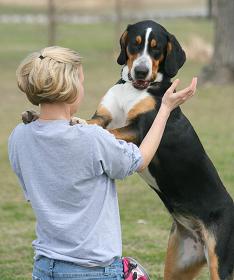 photo courtesy: www.dog-obedience-training-review.com
Jumping – The following suggestions work in general for most dogs, (none of them will apply to all dogs because every dog is an individual like people and every situation is different):
• Swivel your hip into the dog as he leaps on you. Unless you have REALLY bony hips, this shouldn't harm the dog, but will deflect the force of the jump off the more vulnerable parts of your body.
• Step forward and invade the dog's space, possibly also getting him off balance. This move needs to be timed accurately, and used only with dogs that are not fragile or aggressive.
• Give your dog a “sit” cue; a sitting dog is not a jumping dog.
• Give your dog a “down” cue; a dog lying down is not a jumping dog.
Need more training advice? Contact Karen Anderson at PetAgreed Dog Training
Thursday, March 05, 2009
Help protect South Carolina’s pets from domestic violence by supporting House Bill 3117
Help protect South Carolina's animals from abuse
Make a difference today.
Each year throughout South Carolina, countless domestic violence victims risk their lives to protect their defenseless pets from harm. Research has shown that up to 48 percent of battered women remain in abusive homes out of concern for leaving their pets behind.
Children who grow up in an environment of animal abuse live in constant fear that a beloved family member will be harmed. Children often intervene to protect their mothers and pets from being battered, and some may even allow themselves to be victimized to save their pets from being harmed or killed.
To address this issue directly, Rep. Gilda Cobb-Hunter, a longtime advocate for domestic violence survivors, has introduced House Bill 3117. Spearheaded by the South Carolina Coalition Against Domestic Violence and Sexual Assault, the bill encourages judges to include pets in domestic violence protective orders. A protective order is a legal order issued by a court that requires one person to stop harming, stay away from and/or cease contact with another person or, in the case of this bill, that person's pets as well.
We owe it to the countless domestic violence survivors throughout South Carolina to get HB 3117 passed.
HB 3117 is currently in the House Judiciary Committee. Please ask Committee Chairman James H. Harrison to schedule the bill for a hearing and to vote for its passage.
Click here to send a letter to representative Harrison.
Wednesday, February 25, 2009
Colorado State University Veterinarian Offer Tips for Caring for Pet on a Budget
During times of economic struggle, pet owners may be looking for ways to reduce the cost of caring for pets. But some measures that seem to reduce costs may end up being more expensive in the long term because of impacts on a pet's health.
Dr. Rebecca Ruch-Gallie, head of Colorado State University's community practice unit within the Veterinary Teaching Hospital, offers the following tips.
- Don't skimp by purchasing low-cost food. Continue to feed as high a quality of dog or cat food as is affordable. Less expensive food often has lower nutritional value. Cheap foods may be high in 'fillers' such as grains that are not typically digestible by the pet and provide little to no nutrition. In addition, pets on low-quality pet food often need more food to be satisfied and to obtain good nutrition, which ultimately ends up eliminating any savings realized by not paying for a high-quality food.
Over the short term, low-quality food may not impact a pet's health. The pet owner will find himself feeding the pet and cleaning waste more often. But in the long term, pets will experience increased health problems such as diabetes and obesity-related issues, and owners will pay higher veterinary bills.
If a pet is on a prescription diet, it's important to the pet's health - and the owner's budget - that a veterinarian is consulted before the pet is removed from that diet. Often, prescription diets are very effective treatments for a condition that is more expensive to treat with medications in the long term.
- Be creative and frugal when giving treats. If you only feed a dry food, consider giving a small amount of canned food as a treat to dogs or cats. Some pets may be lactose intolerant, but if they are not, yogurt and cheese may make suitable treats as well. Also consider using your pet's kibble as a treat - measure out a suitable amount of dog food each day, for example, and draw treats and meals from that amount.
Also, watch how many treats pets are given. Are multiple members of the family giving the dog treats throughout the day? Those treats may add up to lots of pennies, and they also may add up to an unbalanced diet for the pet. Treats should not be more than 5 percent of a pet's diet; if it is more, the diet is out of balance.
- If Fido is fat, consider putting him and the food budget on a diet. About 30 percent to 50 percent of companion animals are overweight or obese, according to Ruch-Gallie. Reducing the amount of food an overweight pet consumes is better for the pet's health and stretches pet food budgets. Pet owners concerned that their pet has a weight problem should first consult with their veterinarian to identify a target weight before putting their pet on a diet.
- Curb pet-related impulse buys. While treats, bones, toys and such may be costly in some stores, significant savings can be found online or at discount stores. Some pet-supply stores have lower pet food prices but higher treat and toy prices. It pays to comparison shop at different stores and online. Veterinarians often can recommend reliable and reputable websites offering good deals.
However, be wary of online veterinary pharmacies. Many online sources for veterinary prescriptions don't sell quality products, and some may sell knock-offs of medications that ultimately won't benefit the pet.
- Learn how to groom pets at home. Brush pets daily or every other day. There are multiple benefits including increasing the bond between the pet and caretaker if such grooming is a good experience for the pet. Brushing cats and dogs also distributes oils in the animal's coat, increasing the health of their skin and fur, decreasing matting and lowering risks of skin infections and irritations (which may lead to expensive veterinary bills).
In addition, people who groom pets often notice changes and abnormalities in their skin and coat and may notice body changes, lumps or other indications of the early stages of illness or disease. Catching these illnesses early often means that treatments are less expensive than they would be as the illness progresses.
There is a reason why many veterinary appointments are made soon after a pet's trip to the groomer, Ruch-Gallie said, The groomer knows the animal's coat and body and is likely to find changes more quickly as a result of the grooming routine.
Trimming cat's claws and dog's nails and grooming their fur at home also saves money spent on professional groomers.
- Practice good dental hygiene. Daily brushing of dog and cat's teeth has significant returns. Even brushing for a short amount of time, particularly right against the gum line with an enzymatic, pet specific toothpaste decreases the risk of infection in a pet's mouth. Those infections often spread to the blood and into organs such as the kidney or into joints.
In addition, keeping a pet's mouth clean helps veterinarians rule out health issues during a visit. Bad breath may be an indication of a digestive issue, but pet owners who don't brush their dog or cat's teeth can't help veterinarians rule out poor dental hygiene. Often, veterinarians fully clean a pet's teeth - a procedure that requires pets to undergo full anesthesia - before discovering that the root of the bad breath may be much more serious.
In addition, pets who undergo a regular tooth brushing at home don't have to spend as much time under anesthesia during a regular dental cleaning.
- Don't skip vaccinations or flea and tick prevention. Vaccines protect pets from painful and tragic diseases such as rabies, and fleas and ticks carry harmful diseases such as the plague that may also be spread to people in contact with dogs and cats. The diseases are much more expensive to treat than the cost of vaccines administered to pets.
Many veterinary clinics now use vaccines that cover a cat or dog's health for three years, which stretches the value of vaccines.
Some vaccination clinics are offered for pets, but be aware that pets only receive vaccines and not a thorough, careful exam.
- Buy fewer toys, and trick pets into thinking those toys are new time and time again. Pets need toys, particularly indoor cats, to keep them active and keep their mind engaged. However, many pet owners tend to buy too many toys, or pets tend to lose interest in toys over time.
However, keeping a stash of five to 10 toys on hand and rotating a few of them allows pets to be stimulated by 'new' toys often. Provide two or three toys for play at a time and store the others. Replace the toys every two to three weeks with some of the toys that have been set aside, and pets will find them as stimulating as they were when they were new.
Be creative with ways to make toys more interactive. Consider buying Buster Cubes or Kongs for dogs and cats to give them more stimulation while they eat or enjoy treats. Hang feather dancers over heating vents so they move for cats. Move toys from room to room to provide a different venue for pets to play in.
- Weight the benefits of purchasing health insurance for pets. While health insurance may seem pricey, it can be worth the $20 to $30 monthly premium, particularly for some pets. Pet insurance dramatically reduces the costs of large veterinary bills ranging from emergency care after an accident, cancer treatment and preventative check-ups and care including vaccinations. Insurance can cut large bills by hundreds of dollars.
Several different companies offer pet insurance, each with different coverage options and some with exclusions. Some companies will not cover hip dysplasia treatment in some large breeds, for example, while others will. Read the fine print and consult with a veterinarian.
Pet insurance is a particularly good investment for pet owners with older pets, outdoor pets or dog and cat breeds particularly prone to certain diseases or illnesses.
- If possible, maintain an annual wellness exam schedule for your pet. Catching an illness or disease early is almost always less expensive to treat than an illness discovered after it has progressed. Veterinarians may also recommend routine blood work, and Ruch-Gallie recommends paying for it if possible. By nature, animals do a good job of disguising when they are not well; blood work can identify problems long before a pet allows its owner to see symptoms.
Wednesday, February 18, 2009
Moran and Gallegly to Co-Chair Congressional Animal Protection Caucus
WASHINGTON, D.C., February 18, 2009 – Reps. Jim Moran (D-VA) and Elton Gallegly (R-CA) announced today that they will co-chair the newly formed “Congressional Animal Protection Caucus (CAPC),” a bipartisan organization committed to raising awareness of animal welfare issues in Congress. CAPC replaces the Friends of Animals Caucus that existed in previous Congresses.
Through non-partisan forums and briefings, CAPC will seek to highlight important issues affecting animals and upcoming animal welfare legislation. CAPC will also track the progress of relevant legislation, provide members of Congress with dependable information, and attempt to build broad coalitions in support of common-sense, humane animal welfare laws.
In the 110th Congress, the caucus was instrumental in the passing tougher animal fighting legislation, and tightening animal welfare regulations in the 2008 Farm Bill. Priorities for the 111th Congress include legislation banning the slaughter of horses, stronger regulations on Internet sales of puppies, and legislation requiring accurate labels on all fur products.
Rep. Moran stated, “Animals are sensate beings that deserve to be treated with respect and dignity. I look forward to building a consensus among my colleagues in support of sensible animal welfare laws that reflect our common values. Protecting animals from cruel treatment is not a partisan issue.”
“Animal cruelty has no place in a civilized society,” Rep. Gallegly said. “Other crimes often go hand-in-hand with animal fighting, including illegal gambling, drug trafficking and acts of human violence. Virtually every arrest for animal cruelty has also led to additional arrests for at least one of these criminal activities.”
“The American public is united in its belief that all animals deserve humane treatment,” said Wayne Pacelle, President and CEO of The Humane Society of the United States. “The newly constituted Congressional Animal Protection Caucus will help better align our federal policies with public opinion, and we are excited to work closely with its leaders and with the entire Congress to combat cruelty and abuse.”
Media Contact:Jordan Crump: 301-548-7793, jcrump@humanesociety.org
The Humane Society of the United States is the nation’s largest animal protection organization — backed by 11 million Americans, or one of every 28. For more than a half-century, The HSUS has been fighting for the protection of all animals through advocacy, education and hands-on programs. Celebrating animals and confronting cruelty — On the web at humanesociety.org.
Wednesday, February 11, 2009
Dog Art Dealer is hosting a reception on Thurs. night for sporting artist Beth Carlson. More info here: http://is.gd/jcKp
Other events coming up. SEWE retriever demos & dock dogs, Charity dog wash @ My Three Dogs, SC Pit Bull Rescue @ Hairy WInston. More info here: http://is.gd/jcLb
Other events coming up. SEWE retriever demos & dock dogs, Charity dog wash @ My Three Dogs, SC Pit Bull Rescue @ Hairy WInston. More info here: http://is.gd/jcLb
Monday, January 26, 2009
Wednesday, January 21, 2009
Adoptable Pets at Pet Helpers
Get your day started right. Take a look at these awesome photos by Davis Manier of adoptable pets at Pet Helpers. These dogs and cats need good homes. If you can't adopt, consider a tax deductible donation, a donation of food or needed supplies, volunteer at a Pet Helpers event, or go take a few of the shelter dogs out for a walk and some play time. I have a feeling it will do your heart some good too.
To see the photos click on the link, then Portfolio, then Pet Helpers. http://www.davismanier.com/
Tuesday, January 20, 2009
Tuesday, January 13, 2009
PLANET DOG ANNOUNCES WINNERS OF
ANNUAL ADOPTION CHAMPION AWARDS PROGRAM
Portland, Maine (January 13, 2009) – Planet Dog is proud to announce the winners of their annual Adoption Champion Awards. As part of their ongoing campaign to encourage adoption and reduce the number of pets euthanized each year, Planet Dog created the awards program to support, encourage and reward Planet Dog retailers who "romp the extra mile" when it comes to social responsibility, philanthropy and advocacy for pet adoption.
Each fall, Planet Dog's ACA Committee, a cross-functional team of staff members, selects winners from the pool of those nominated by the company's Sales Account Executives. Nominations for the award are based on annual performance in the following areas: adoption days held at their store; fundraisers held or sponsored for shelters and non-profit animal rescue organizations and overall Planet Dog purchases that determine annual contributions to the Planet Dog Foundation (PDF), Planet Dog's non-profit grantmaking organization.
In addition to receiving a $500 credit for Planet Dog merchandise, the annual winners are listed on the Find A PDOG Retailer section of the company's website (www.planetdog.com) with a special icon that recognizes their achievement, in the Planet Dog wholesale catalog and in Kibble (Planet Dog's Retailer newsletter).
"We are proud to support the many PDOG Retailers that are using creative and effective ways to find loving homes for pets in need," said Catherine Frost, Planet Dog's Brand & Product Champion. "It thrills us to be able to recognize their deep commitment to animal welfare and partner with them at the community level," added Frost.
The four PDOG Retailers to receive the 2008 Adoption Champion Awards are Chuck & Don's of Minneapolis, MN; Hero's Pets of Littleton, CO, Woof! of Plano, TX and the Oregon Humane Society of Portland, OR. These four stores combined have reached out to more than 50 shelters and rescue groups in the form of financial donations and adoption days. To learn more about why these stores were chosen, please visit www.planetdogretailer.com to read their stories in the latest edition of Kibble.
"I want to thank Planet Dog for considering us, especially as I think at WOOF, we are really just doing our part," said MH Hall, Owner of WOOF. "We tend to be more aware of all that we still cannot do so it is great for Planet Dog to recognize that what we are doing is making a difference," added Hall.
In addition to the Adoption Champion Awards Program, Planet Dog also recognizes their retailers who have adoption advocacy integrated in their store's mission. Retailers who hold regular adoption days (at least monthly) in their store or help support their local certified animal shelter are listed as Adoption Advocates on the Find A PDOG Retailer section of www.planetdog.com.
"We realize that our retailers come in many shapes and sizes and that although the Adoption Champion Award celebrates four worthwhile businesses, there are scores of others who are doing what they can to support pet adoption," said Frost. "We want to be sure that these businesses still get the ongoing recognition they deserve," added Frost.
Planet Dog also developed a national Public Service Campaign (PSA) to educate and build awareness about the issue of pet adoption with the United States. To date, the effort has helped influence 750 adoptions across the country.
Whether creating great products, providing financial resources or helping to educate consumers about canine-related issues, Planet Dog is proud to be a pet industry leader with proven socially responsible initiatives that bring people and dogs together for fun and mutual support.
"As a small company doing big things, our goal will always be to improve the world around us by giving back to our community, our workforce and the environment," said Alex Fisher, Planet Dog's Founder. "Our internal mantra is ‘think globally, act doggedly’. When running a business, it’s easy to get absorbed in just the dollars and cents. The mantra helps keep us focused on the higher cause for which we entered this industry,” added Fisher.
Planet Dog’s flagship initiative is the Planet Dog Foundation. The Foundation, whose philanthropic mission is to promote and celebrate programs that enable dogs to serve and support their best friends, receives a percentage of every Planet Dog purchase. In turn, it is donated back to non-profit canine service programs nationwide.
“We’re doing what no other pet product company is doing," said Stephanie Volo, Planet Dog's President. “We offer unique, top-quality products that dogs love, while creating awareness of how much service dogs give back to people in our society. Our goal is for our actions to speak louder than woofs,” added Volo.
Since January 2006, PDF has given away more than $400,000 in grants and in-kind donations to several worthy organizations nationwide. For more information and a full list of programs and grantees, please visit www.planetdogfoundation.org.
Subscribe to:
Posts (Atom)